
An Equal Employment Opportunity (EEO) complaint is a formal allegation of employment discrimination brought by a federal employee or applicant against a federal agency. Unlike a private sector discrimination charge, an EEO complaint begins inside the employee’s own agency, follows a detailed administrative path, and starts with one of the shortest filing deadlines in federal law.
For federal employees and applicants who believe they were treated unfairly at work, understanding the process early can preserve the right to challenge discrimination before a missed deadline cuts off the claim. This guide explains who can file, which federal EEO protections commonly apply, the reasons these complaints are brought, how the process moves from informal counseling to a formal complaint, investigation, hearings, and appeals, how federal sector claims differ from private sector cases, and when to seek legal help. It is part of the firm’s broader federal employment practice.

Equal Employment Opportunity Protections for Federal Employees
The Equal Employment Opportunity Commission (EEOC) enforces the EEO laws that apply in the federal workplace, including Title VII of the Civil Rights Act, the Age Discrimination in Employment Act, the Rehabilitation Act, the Equal Pay Act, and the Genetic Information Nondiscrimination Act. As explained by the EEOC’s federal sector overview, the protected bases include:
- Race, color, religion, and sex, including pregnancy, sexual orientation, and transgender status
- National origin, which covers adverse actions based on birthplace, ancestry, or ethnicity
- Age, for federal employees and applicants age 40 or older
- Disability, which in the federal sector proceeds under the Rehabilitation Act and includes the denial of a reasonable accommodation
- Genetic information, including family medical history
Retaliation is also a protected basis. An agency may not punish an employee for previously opposing discrimination, reporting discriminatory practices, or participating in the EEO complaint process, even in a coworker’s case. Employees who report fraud, waste, or abuse have separate protections against whistleblower retaliation. Some characteristics, such as marital status and political affiliation, are protected by other federal law and executive orders rather than the statutes the EEOC enforces.
Common Reasons for Filing an EEO Complaint
Most complaints allege that discrimination occurred in a concrete personnel action or in the conditions of the workplace. Common examples of employment discrimination in the federal sector include:
- Non-selection, demotion, or removal tied to a protected characteristic
- Harassment claims, including unwelcome words, actions, or other conduct that creates a hostile environment
- Denial of a reasonable accommodation for a disability or religious practice
- Unequal pay, discipline, or performance ratings compared to similarly situated coworkers
- Retaliation after an employee has experienced discrimination and reported it
Employees who face discrimination, harassment, or retaliation benefit from acting promptly, because the first deadline arrives quickly.
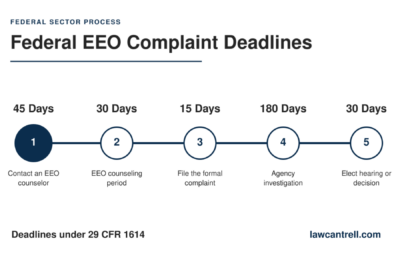
Step One: Contact an EEO Counselor Within 45 Calendar Days
The federal process does not begin with a lawsuit or a charge filed at an EEOC office. It begins when the employee initiates contact with an EEO counselor, often through an informal inquiry at the agency’s EEO office. Under 29 CFR 1614.105, that initial contact must happen within 45 calendar days of the date the alleged discrimination occurred. For ongoing harassment, the clock runs from the most recent incident.
Missing the 45 day window for the informal complaint process can bar the claim entirely, and it is far shorter than the deadlines private sector workers receive. Initiating contact early preserves every later stage of the process.
EEO Counseling and Alternative Dispute Resolution
After initial contact, the informal complaint stage begins. EEO counseling typically lasts 30 days, during which the EEO counselor gathers basic facts about the alleged discrimination and attempts an informal resolution. Many agencies also offer alternative dispute resolution, such as mediation with a neutral mediator, and choosing that route can extend the informal stage to 90 days.
If the informal EEO complaint is not resolved, the counselor holds a final interview and issues a written notice of the right to file. That notice starts the next deadline.

How to File a Formal EEO Complaint With Your Agency
The employee has 15 calendar days from receiving the notice to file a formal complaint with the agency’s EEO office. For anyone researching how to file an EEO complaint, the two step structure matters: informal counseling first, formal EEO complaint second, each with its own deadline. That formal filing is the original complaint, the employee’s initial written submission to the agency’s EEO office. A formal complaint should:
- Identify each action or decision being challenged and when it happened
- State the protected basis for each claim, such as race, color, religion, sex, or disability
- Describe any retaliation that followed protected activity
- Be signed by the employee or their representative
Documentation of incidents and evidence is crucial at this stage. Dates, emails, witness names, performance records, and notes made at the time all strengthen a discrimination complaint. The agency reviews the filing and may dismiss it on procedural grounds, for example, when counselor contact was untimely. If the complaint is accepted, an investigation follows.
The Investigation and Choosing Your Next Step
The agency has 180 days from the filing of the formal complaint to complete the investigation, or from the last amendment if the complaint is amended. The employee then receives a report of the investigation along with notice of the options that follow. Within 30 days of receiving that report, the employee must choose a next step:
- Request a hearing before an EEOC administrative judge
- Request a final agency decision, the agency’s final decision issued without a hearing
Available remedies can include reinstatement, back pay, compensatory damages, corrected personnel records, and attorney fees. Outcomes depend on the facts, and no result is guaranteed at any stage.
Hearings Before an EEOC Administrative Judge
A hearing request is generally submitted within 30 days of receiving the report of investigation, and hearing requests can be filed through the EEOC Public Portal. The administrative judge can permit discovery, hear testimony, and decide the claim. After the judge issues a decision, the agency has 40 days to issue a final order stating whether it will fully implement the AJ’s decision. That final order is the agency’s final action on the complaint.
Appeals, Reconsideration, and Civil Action
An employee who disagrees with the agency’s final order or final agency decision may appeal to the EEOC Office of Federal Operations, usually within 30 days of receipt. If the appeal decision is unfavorable, the employee may request reconsideration within 30 days of receiving it.
A federal employee also has the right to file a civil action in federal district court within 90 days of receiving a final order or appeal decision, or after 180 days have passed at certain stages without a decision. Some matters are mixed cases, meaning the same events involve an action appealable to the Merit Systems Protection Board, such as a removal or demotion, and those follow different routing rules. Employees facing termination alongside discrimination may also want to review the signs of wrongful termination.
How an EEO Complaint Differs From a Private Sector EEOC Charge
Private sector employees typically report discrimination by filing a charge directly with the EEOC within 180 to 300 calendar days of the discrimination. Federal employees follow the administrative path described above, starting inside their agency with a 45-day window and completing each required stage before going to court.
Because the EEO complaint process is procedural and deadline-driven, small missteps early on can limit options later. Early review of the timeline helps preserve the right to file at every stage.

When to Involve a Federal Employment Lawyer
Not every dispute requires counsel, but federal employment cases reward early preparation. A federal employment lawyer can help frame the claims in the formal complaint, respond to the investigation, evaluate whether to request a hearing or a final agency decision, and track the overlapping deadlines for appeals and civil action. A firm with employment litigation experience can also carry a claim into federal court when the administrative stages end. Legal review is especially useful in mixed cases and in matters that could affect a security clearance or retirement benefits.
Protecting Your Rights as a Federal Employee
An EEO complaint gives federal employees a structured way to challenge discrimination and protect their workplace rights, but the structure only works for those who meet its deadlines: 45 calendar days to contact an EEO counselor, 15 days to file the formal complaint after notice, 30 days to choose a hearing or final agency decision, and strict windows for appeals, reconsideration, and court filings after that.
Cantrell Schuette represents federal employees nationwide in EEO complaints, MSPB appeals, and related federal employment matters. If you are preparing an EEO complaint or facing an upcoming deadline, contact Cantrell Schuette today to schedule a consultation and understand your legal options.