
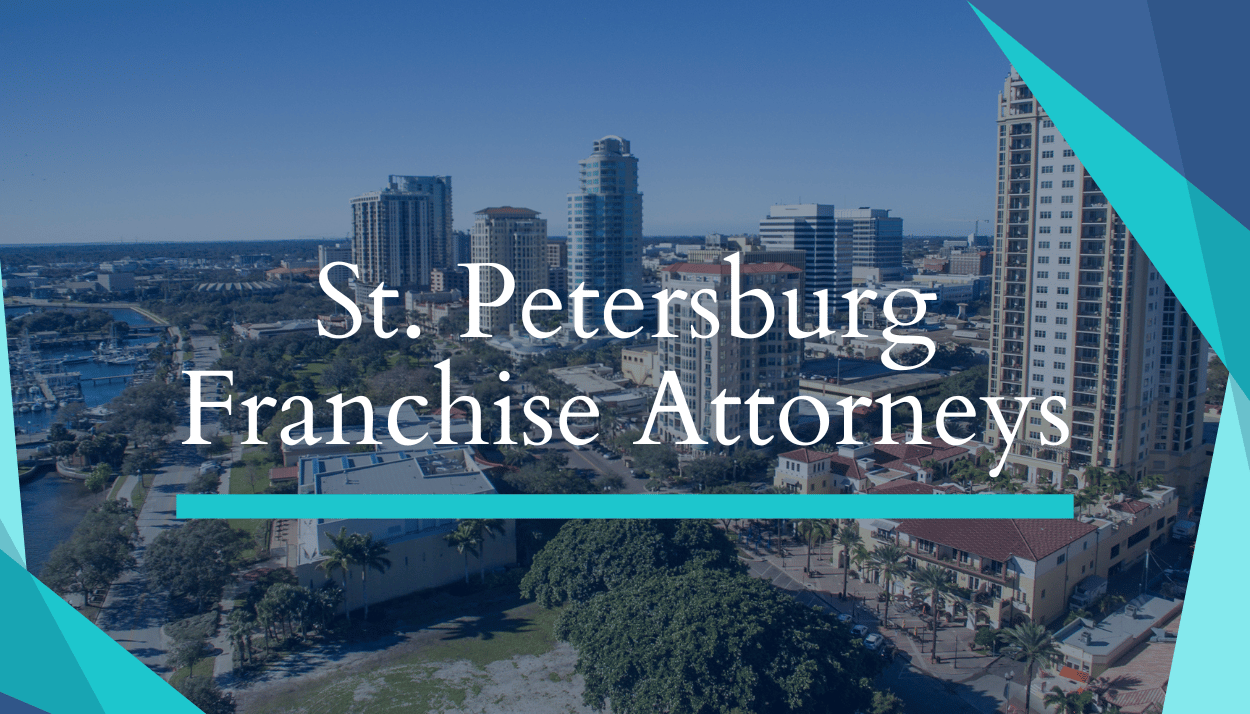
St. Petersburg Franchise Attorneys
Our St. Petersburg franchise attorneys help franchisors and franchisees with FDD reviews, franchise agreements, compliance, and dispute resolution throughout Florida.




It's Easy to Get Started.
Exceptional Credentials
Subject-Matter Depth
Unwavering Commitment
Millions Recovered

Award Winning Franchise Lawyers In St. Petersburg
Cantrell Schuette, P.A. offers legal guidance for individuals considering franchise ownership in St. Petersburg, Florida. With a team of experienced attorneys specializing in franchise law, the firm navigates the complex legal landscape, ensuring clients’ interests are protected throughout the process. Their expertise spans federal and state regulations, encompassing tasks such as drafting agreements, compliance advice, and addressing disputes.
What is franchising and how does it work?
Franchising is a business model that allows individuals to own and operate their own businesses using the established brand, products, and services of an existing company. This arrangement, known as a franchise, involves a legal and commercial relationship between the franchisor (the company granting the franchise) and the franchisee (the individual or entity receiving the rights to operate under the established brand).
The process of franchising typically follows a structured framework:
Franchise Framework
Franchise Agreement: At the core of franchising is the franchise agreement, a legally binding document that outlines the terms and conditions of the franchisor-franchisee relationship. This agreement details the rights and obligations of both parties, including the use of intellectual property, operational guidelines, support services, and financial considerations.
Initial Investment: Franchisees are required to make an initial investment, which covers various costs such as franchise fees, training, and initial inventory or equipment. This investment grants the franchisee access to the franchisor’s established brand and support system.
Training and Support: Franchisors typically provide comprehensive training programs to ensure that franchisees understand the business model, operations, and brand standards. Ongoing support is also offered to address any challenges or questions that may arise during the operation of the franchise.
Operational Guidelines: Franchisees are required to adhere to specific operational guidelines set by the franchisor. These guidelines ensure consistency in products, services, and customer experience across all franchise locations, contributing to the overall strength of the brand.
Royalties and Fees: In exchange for the ongoing support and access to the established brand, franchisees often pay royalties and other fees to the franchisor. These financial arrangements are outlined in the franchise agreement and are essential for the continued growth and support of the franchise system.
Legal Guidance
Franchising provides individuals with the opportunity to become entrepreneurs while benefiting from the established success and support of a well-known brand. However, it is crucial for both franchisors and franchisees to carefully review and negotiate the terms of the franchise agreement to ensure a mutually beneficial and legally sound relationship.
For legal guidance on franchising matters in St. Petersburg, Florida, Cantrell Schuette, P.A. is dedicated to assisting clients in navigating the complexities of franchise law and facilitating successful business relationships. If you are a franchisor, franchisee, or considering becoming a franchisor or franchisee in the St. Pete area, contact us for a no-cost initial consultation at (727) 509-6555 or coordinator@lawcantrell.com.
What laws or rules apply to franchise agreements in St. Petersburg, Florida?
Franchise agreements in St. Petersburg, Florida are subject to a set of laws and regulations designed to govern the relationship between franchisors and franchisees. Understanding and adhering to these legal frameworks is crucial for both parties involved in a franchise arrangement. The following key laws and rules apply to franchise agreements in St. Petersburg, Florida:
Key Laws
- Florida Misrepresentation Franchise Act: The Florida Franchise Misrepresentation Act, section 817.416, Florida Statutes, aims to protect investors in Florida franchises by holding franchisors accountable for misrepresentations. The act grants a private right of action to individuals who are misled about the prospects, total investment, or excessive expansion efforts related to a franchise or distributorship. Qualifications for franchise misrepresentation include a franchisor’s failure to disclose or misrepresentation of investment details, success opportunities, or sustainable market expansion. The act applies to Florida-based franchisees, offering remedies such as a return of invested money, lawsuit filing cost coverage, and reasonable attorney’s fees in case of legal action.
- Federal Trade Commission’s (FTC) Franchise Rule: Franchisors in St. Petersburg must comply with the FTC Franchise Rule, which aims to provide potential franchisees with comprehensive information to make informed investment decisions. The central provision is the requirement for franchisors to provide a Franchise Disclosure Document (FDD) containing details about the franchise system, financial performance, fees, and rights and responsibilities. The FDD must be given at least 14 days before any binding agreement or payment, allowing for a “cooling-off” period. The rule also addresses franchise renewal, termination conditions, financial performance representations, and advertising restrictions. The FTC Franchise Rule contributes to fair and ethical franchising practices, supporting St. Pete’s economic growth.
- Contract Law: Florida contract law governs the creation and enforcement of franchise agreements in St. Petersburg. Franchise agreements must adhere to the implied duty of good faith and fair dealing, requiring honest and fair actions from both parties. Enforceability depends on meeting legal requirements, including clear terms, lawful objectives, and consideration. It is crucial to consider Florida-specific statutes, federal regulations, and consult with a specialized attorney for a comprehensive understanding of how Florida contract law affects franchise agreements in St. Petersburg.
- Business Regulation and Zoning Laws: Franchise operations may be subject to local business regulations and zoning laws in St. Petersburg. It is crucial for both franchisors and franchisees to be aware of and comply with any local ordinances governing their specific type of business. The City of St. Petersburg’s zoning ordinances govern land use categories and dictate the establishment of businesses within specific zones, requiring franchisees to ensure their chosen location complies with designated land use guidelines. Zoning laws may impact various aspects, including signage and building design, necessitating careful consideration during site selection. Compliance is crucial to avoid legal consequences and disruptions to business operations. Local regulations may also impose specific requirements, such as licensing and permits, which both franchisors and franchisees must navigate to maintain legal standing within the community.
- Intellectual Property Laws: Franchise agreements in St. Petersburg, Florida, often involve intellectual property aspects, including trademarks, copyrights, and trade secrets. Trademarks, crucial for brand representation, must be protected, with franchisees following guidelines on their usage. Copyright laws may apply to creative works within the franchise system, such as manuals and training materials. Trade secrets, comprising confidential information, are shared between parties, necessitating provisions for their protection in franchise agreements.
Legal Counsel
The above only provides a broad overview, and it is advisable for individuals involved in franchise agreements to seek legal counsel from experienced attorneys, such as those at Cantrell Schuette, P.A., to ensure compliance with the specific laws and regulations applicable in St. Petersburg, Florida.

What is the FTC Franchise Rule and how does it apply to a franchise in St. Petersburg, Florida?
The Federal Trade Commission (FTC) Franchise Rule is a set of regulations designed to protect potential franchisees by ensuring they receive essential information about the franchise they are considering. These regulations aim to promote transparency and prevent deceptive practices within the franchising industry.
In the context of St. Petersburg, Florida, franchises operating within the city must adhere to the guidelines set forth by the FTC Franchise Rule. Compliance with these regulations is crucial for both franchisors and franchisees to maintain legal integrity and protect the rights and interests of all parties involved.
Franchise Disclosure Document
The FTC Franchise Rule requires franchisors to provide a Franchise Disclosure Document (FDD) to potential franchisees. This document contains detailed information about the franchisor, the franchise system, and the terms of the franchise agreement. Franchisees in St. Petersburg, Florida, have the right to receive this document at least 14 days before signing any agreements or making any payments to the franchisor.
Additionally, the FDD must include relevant information about the franchisor’s financial history, the costs associated with establishing and operating the franchise, the responsibilities of both parties, and any legal actions involving the franchisor. This comprehensive disclosure enables potential franchisees in St. Petersburg to make informed decisions about entering into a franchise agreement.
For more information about the FTC Franchise Rule, see the FTC’s compliance guide located at ftc.gov.
Franchise Rule Guidance
Cantrell Schuette, P.A. is committed to assisting clients in navigating the intricacies of franchise law, including compliance with the FTC Franchise Rule. Our experienced attorneys provide legal counsel to both franchisors and franchisees in St. Petersburg, ensuring that they understand their rights and obligations under the law. If you are involved in a franchise transaction or seeking guidance on franchise-related matters, our legal team is here to offer knowledgeable and dedicated support.

Is a franchise in St. Petersburg required to register with the State of Florida?
Unlike some states that have specific franchise registration laws, franchisors in St. Petersburg, are not specifically required to file registration documents with the State of Florida. However, pursuant to Florida’s Sale of Business Opportunities Act franchisors operating in Florida are obligated to complete and submit an annual Franchise Exemption to the Florida Department of Agriculture & Consumer Services. This requirement applies before offering or selling a franchise within the state or to a resident of Florida.
Florida Franchise Registration
The Franchise Exemption application requires payment of a $100 fee and basic information about the franchise, including name, trade name, addresses, and federal employer ID number. Initially, the application must be physically mailed, but subsequent renewals can be done either physically or online. The exemption is applicable as long as the franchise complies with Federal Trade Commission orders or actions related to franchises. To maintain this exemption, franchisors must annually submit a Franchise Exemption Application Packet along with the $100 fee.
Additionally, it’s important to note that while there is no state-level registration requirement, the State prohibits intentional misrepresentation or failure to disclose specific information related to the sale of certain types of franchises pursuant to the Florida Misrepresentation Franchise Act.
Moreover, federal regulations still apply. Franchisors must adhere to the disclosure requirements set forth by the Federal Trade Commission (FTC). This involves providing prospective franchisees with a Franchise Disclosure Document (FDD) that contains essential information about the franchise opportunity.
Legal Counsel
Navigating the legal landscape of franchise law can be complex, and it’s advisable for businesses in St. Petersburg to seek guidance from experienced franchise attorneys. The legal team at Cantrell Schuette, P.A. is well-versed in franchise law matters and can provide comprehensive assistance to franchisors in understanding and meeting their obligations. Understanding both state and federal regulations is crucial for the success and compliance of franchise businesses in St. Petersburg, Florida. Contact us at (727) 509-6555 or coordinator@lawcantrell.com.

Do you represent franchisors or franchisees in St. Petersburg, Florida?
We are dedicated to providing comprehensive services to both franchisors and franchisees. We emphasize collaboration with franchisors to create meticulous franchise agreements that preserve brand identity and ensure legal compliance. Our attorneys can simplify the legal intricacies of franchise agreements for franchisees, empowering them to make informed decisions and negotiating terms aligned with business goals. In cases of disputes, our team has extensive experience in alternative dispute resolution and litigation, representing both franchisors and franchisees.
Legal Support for Franchisors
Comprehensive Legal Support for Franchisors
- Recognizing the need for thorough legal solutions, our firm focuses on safeguarding brand identity and facilitating sustainable growth for franchisors.
- Our skilled attorneys closely collaborate with franchisors to create detailed franchise agreements covering vital aspects of the franchisor-franchisee relationship.
- We craft agreements reflecting the brand’s values, ensuring uniqueness while safeguarding legal interests.
- We provide insights into industry best practices, assist in franchise expansion strategies, and guide through the complexities of disclosure documents and regulatory compliance.
- Legal guidance is offered to protect trademarks, trade secrets, and proprietary information, allowing confident franchise expansion while adhering to legal standards.
- We work closely with franchisors to draft and review legally sound franchise agreements in compliance with St. Petersburg and Florida franchise laws.
- Ongoing legal support is provided, addressing regulatory compliance, intellectual property protection, and dispute resolution.
Advocacy for Franchisees
Advocacy for Franchisees’ Rights
- Our firm assists prospective and established franchisees in understanding legal intricacies, conducting comprehensive reviews of franchise agreements, and translating complex terms into clear language.
- Our attorneys shed light on financial implications, operational requirements, and potential challenges, empowering franchisees to make informed investment decisions.
- We advocate for franchisees during negotiations, striving for terms that support business objectives.
- We provide guidance for franchise opportunities and challenges within existing franchise relationships, helping navigate franchise law intricacies.
- For franchisees considering investment in St. Petersburg-based franchises, we review agreements, helps negotiate terms, and ensures a clear understanding of obligations, rights, and potential risks.
- Our experienced litigators advocate for franchisees’ rights in disputes through negotiation, mediation, or litigation, aiming for fair resolutions that protect their investment and livelihood.
Schedule a Consultation
Whether you are a franchisor seeking to expand your business or a franchisee navigating the intricacies of franchise agreements, Cantrell Schuette, P.A. is here to provide expert legal guidance. Contact our St. Petersburg office today at (727) 509-6555 or coordinator@lawcantrell.com to schedule a consultation and discover how our experienced franchise law attorneys can help you achieve your business objectives while protecting your legal interests. Your success is our priority, and we look forward to being your trusted legal partner in the dynamic world of franchise law.

Do you handle Franchise disputes in St. Petersburg, Florida?
Yes! Handling franchise disputes in St. Petersburg, Florida requires seasoned legal expertise, and Cantrell Schuette, P.A. is here to assist. Our attorneys specialize in franchise law, offering comprehensive support for businesses in St. Petersburg and beyond.
With years of experience, our team is well-equipped to address a variety of franchise disputes. We prioritize a client-centric approach, working closely with businesses to develop tailored legal strategies for success. As a St. Petersburg-based firm, we bring local insight to better understand and navigate the unique dynamics of the business landscape.
Franchise Dispute Representation
Our services include assisting in mediation and arbitration for amicable dispute resolution, as well as litigation when necessary. We are adept at presenting compelling cases in court to protect our clients’ rights and achieve favorable outcomes. Additionally, we assist businesses by reviewing and negotiating franchise agreements to prevent disputes before they arise.
Common franchise disputes we handle include breach of contract, termination, non-renewal, and trademark infringement. Whether you are dealing with violations of franchise agreements or protecting your brand from unauthorized use, we have the expertise to guide you through.
Schedule a Consultation
If you find yourself in a franchise dispute in St. Petersburg, Florida, reach out to Cantrell Schuette, P.A. for strategic and effective legal representation. Don’t navigate the complexities alone – let our experienced team advocate for your business. Contact us for a consultation at (727) 509-6555 or coordinator@lawcantrell.com.

What Local Business Regulations and Zoning Laws Should Franchises Consider in the City of St. Petersburg?
Understanding and complying with local regulations is essential for the success of any business endeavor, especially franchises, and we are here to guide you through the intricacies of St. Pete’s regulatory framework. The following provides a brief overview of the potential regulations and ordinances affecting franchises in St. Petersburg.
Permitting
Permitting
Navigating St. Petersburg’s dynamic growth requires a clear understanding of the city’s permitting processes. Below are a few of the permitting requirements that may affect your franchise in St. Pete.
Building Permits
St. Petersburg is experiencing growth as it attracts more businesses and residents. Obtaining building permits is a crucial step in facilitating the development process. The Construction Services and Permitting Division collaborates with citizens and customers to ensure that development projects meet minimum code standards.
Impact Fees
The City collects impact fees, specifically multimodal impact fees (MIFs), to fund transportation improvements. These fees, governed by the Pinellas County Countywide MIF Ordinance, support the necessary transportation system improvements required to accommodate the new trips generated by land development projects.
Food Permit Fees
For the vibrant food scene in St. Petersburg, special permitting requirements apply to food service operations. For example, all new and existing food service facilities must obtain a permit from Public Utilities for grease management.
Certificates and Licenses
Certificates and Licenses
Embarking on a business venture in St. Petersburg involves obtaining various certificates and licenses. Discover the significance of certifications and licenses below.
Bicycle Friendly Business Certification
- Recognizing efforts to create a welcoming environment for cyclists, the Bicycle Friendly Business program acknowledges employers who promote bicycling among employees, customers, and the community.
Business Tax Certificates
- Before conducting business in St. Petersburg, business owners must obtain a Business Tax Certificate Receipt. This annual tax, in accordance with Chapter 205 of the Florida Statutes & Chapter 17 of the city code , grants the privilege of engaging in or managing any business within the city limits.
Pet Friendly Business Certification
- St. Pete PAWS encourages businesses to become pet-friendly. This initiative promotes a compassionate approach to animal companionship, making St. Petersburg a place where animals are happy, healthy, and welcome.
Grants and Loans
Grants and Loans
Unlocking financial support is crucial for businesses, property owners, and developers. St. Petersburg offers various grants and loans to support businesses, property owners, and developers. Opportunities like the Economic Development Ad Valorem Tax Exemption program, Brownfield redevelopment bonus, and federal programs such as historic rehabilitation tax credits provide financial support for eligible ventures.
Planning and Zoning
Planning and Zoning
Preserving the city’s authentic fabric while planning for the future is a key consideration. The City of St. Petersburg’s zoning ordinances govern land use categories and impact aspects like signage and building design. Franchisees must ensure compliance with designated land use guidelines to avoid legal consequences and disruptions to business operations.
Legal Guidance
At Cantrell Schuette, P.A., we are committed to helping you navigate these ordinances and regulations seamlessly, ensuring your business thrives in the vibrant and evolving landscape of St. Petersburg. Contact us at (727) 509-6555 or coordinator@lawcantrell.com for adept legal guidance tailored to your specific needs.

What Our Clients Say
Above and beyond expectations
My experience has been personal and professional. The amount of attention and follow up has been above and beyond expectations. I know they are working hard for me to provide the best possible outcome.
Lance Card
Thoroughly impressed by their professionalism and dedication
I’ve had the pleasure of working with this law firm, and I am thoroughly impressed by their professionalism and dedication. From the start, they approached every aspect of my case with transparency and clear communication.
Craig Hyatt
Very considerate and accommodating
Wonderful legal counsel. Very considerate and accommodating and really wanted to take time to listen and help me!! I highly recommend!
Excellent help and recommendations
St. Petersburg Franchise Law Firm
The legal approach adopted by Cantrell Schuette, P.A. is tailored to each client’s unique situation. Through a comprehensive assessment, they provide customized legal solutions for entering into new franchise agreements, renegotiating terms, or resolving disputes. The firm emphasizes strategic guidance to enhance the likelihood of franchise success.
Recognizing the importance of regulatory compliance, the firm commits to keeping clients informed about relevant laws, from disclosure requirements to state-specific regulations. In cases of disputes, experienced litigators are ready to advocate for clients, aiming for efficient resolutions through negotiation, mediation, or litigation.
Speak With an Experienced Attorney Today
For individuals contemplating franchise ownership in St. Petersburg, the firm advises a thorough assessment of various aspects before entering agreements. Key considerations include legal compliance, thorough review of the Franchise Disclosure Document, financial evaluations, understanding site selection and territory rights, renewal and termination provisions, training and support, and planning for exit strategies. Cantrell Schuette, P.A. is a knowledgeable legal partner for those embarking on the significant decision of becoming franchisees.
If you require expert legal advice on establishing a new franchise or need assistance with a franchise disagreement in St. Petersburg, don’t hesitate to reach out to us. Arrange a complimentary consultation with our committed lawyers by calling (727) 509-6555 or emailing us at coordinator@lawcantrell.com. Your journey to a saucerful franchise begins with Cantrell Schuette, P.A.
Our St. Petersburg Law Office

Address
9800 4th St N #200, St. Petersburg, FL 33702

Phone
(727) 509-6555